What are the risks of using a virtual address?
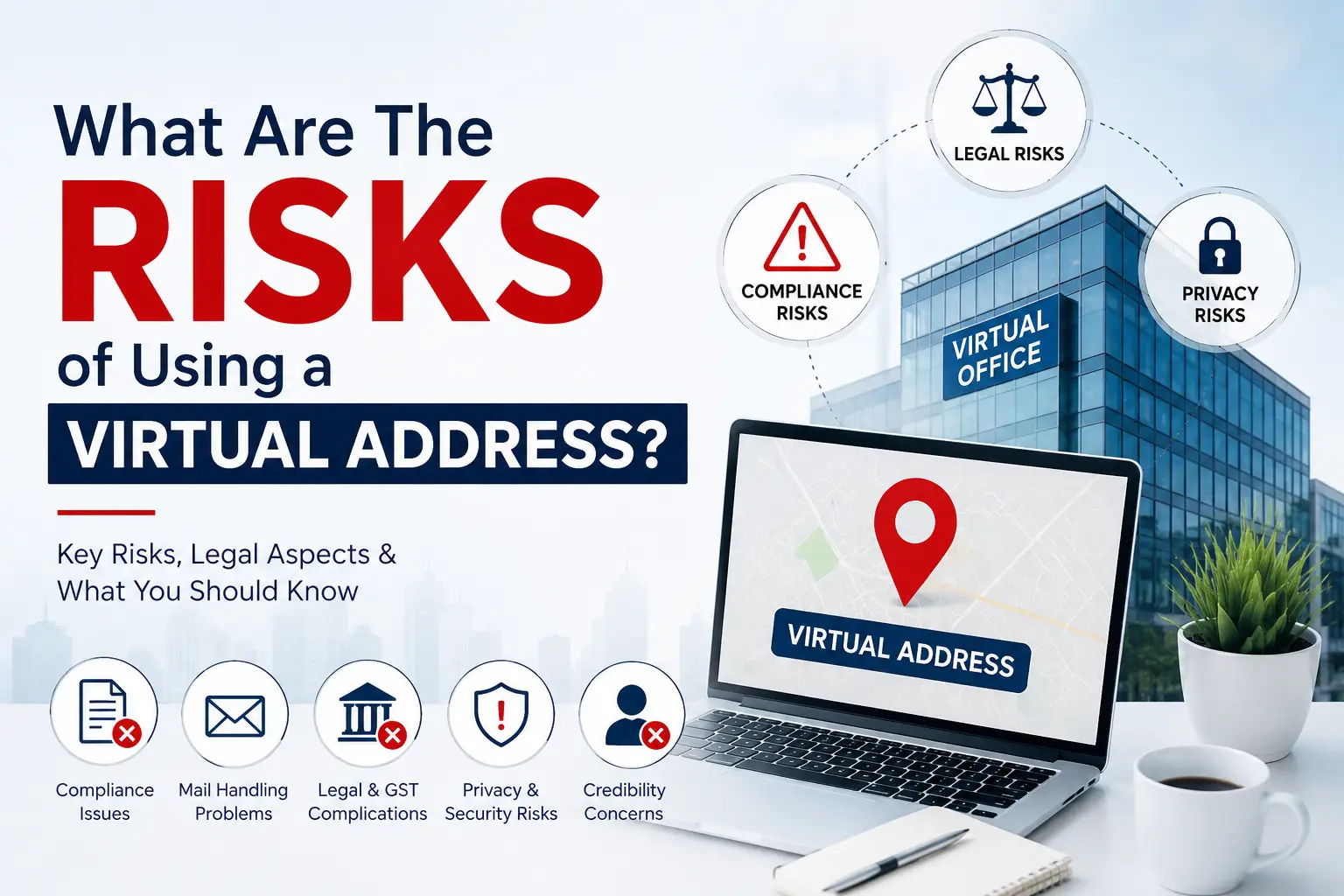
A virtual address carries real risks, but most of them come from a weak provider rather than the model itself. The main ones are compliance and documentation gaps, extra scrutiny during GST registration, stricter checks when you open a bank account, mail that reaches you late, and providers who cut corners to stay cheap. Any of these can slow down a registration or create a compliance headache if you pick the wrong address.
None of them make a virtual address unsafe on its own. A virtual address is a genuine commercial address that a provider lets you use for registration, mail, and a professional presence, without renting the full space. Knowing where the risks actually sit is what helps you avoid the ones that matter.
Key Takeaways
- Most risks of using a virtual address trace back to the provider, not the model.
- Missing or weak documents like the NOC, rent agreement, and utility bill are the top cause of GST and ROC rejection.
- Several GSTINs registered at one address can trigger a physical verification.
- Banks often run a KYC visit, and an address with no name board or no staff can fail it.
- A properly documented address from a verified provider clears most of these risks.
What is a Virtual Address?
A virtual address is a real commercial address, owned or leased by a service provider, that businesses use for company registration, GST registration, mail handling, and a professional business presence without occupying the space. It works for startups, freelancers, e-commerce sellers, and companies expanding to a new state. The address is legal and widely used in India when it comes with valid documentation. The risks appear when the paperwork is thin, the provider is unreliable, or the business type genuinely needs a physical premises.
The Risks of Using a Virtual Address
There are a handful of risks worth understanding before you sign up. Almost all of them split into two groups. Some are tied to the quality of the provider you choose, and a few are tied to your business type or how carefully your documents are prepared. The virtual address model itself is legal in India and accepted by the MCA, GST authorities, and most banks. What follows is where things go wrong in practice.
Compliance and documentation gaps
The biggest risk is incomplete or incorrect documentation. For company or GST registration, you need a No Objection Certificate from the property owner, a rent or lease agreement, and a recent utility bill for the premises. If the provider cannot supply these correctly and on time, the registration stalls. Section 12 of the Companies Act also requires a registered office that can receive official communication. With Team Cowork, the client submits KYC documents such as PAN, Aadhaar, and video KYC, while the provider supplies the NOC, rent agreement, and utility bill.
GST scrutiny and possible rejection
GST is where most of the worry sits, and there are clear reasons behind it. Applications get flagged when the address does not match exactly across the NOC, utility bill, agreement, and the GST portal, when the NOC is weak, when the premises sits in a residential zone, or when many businesses are registered at the same address. A Tamil Nadu GST ruling touched on multiple registrations at a single virtual office, and the portal can issue a REG-03 clarification notice or order a physical visit. Understanding why GST gets rejected helps you prepare.
Opening a business bank account
Most private banks accept a virtual address for a current account when it is backed by a rent agreement, NOC, and utility bill. Some public sector banks apply stricter KYC and may ask a director to visit a branch. Banks also run a physical verification visit as part of KYC. If the officer arrives and finds no name board and no one present, the account can be refused and the process restarts. A staffed premises with signage avoids this.
Mail handling delays
Legal notices, tax demand orders, and compliance reminders all arrive at your registered address. If the provider is slow to forward mail or misplaces it, you can miss a deadline that matters. This is a small operational risk with real consequences during a GST notice or an ROC filing window. Ask whether the provider scans incoming mail and forwards it by email rather than by courier alone, so nothing sits unread at the address for days.
Unreliable providers
Picking the cheapest option is a common mistake. Very low-cost providers sometimes cut corners on documentation, offer poor support, or stop responding when you need help during a verification. Some over-fill a single address with hundreds of registrations. Before you commit, check how long the provider has operated, read genuine reviews, and confirm they will actually be present to receive a GST officer or bank official. Service history matters more than a few hundred rupees saved each month.
Shared-address reputation checks
Because a virtual address is used by more than one business, the address itself carries a shared reputation. If too many firms register there, or if a past user was linked to fraudulent activity, banks and authorities may apply extra scrutiny to everyone at that location. This does not mean automatic rejection, and genuine businesses with clean documents usually pass. It is a reason to pick a provider that verifies its clients and does not stack unlimited registrations onto one address.
Not right for every industry
A virtual address suits businesses that operate remotely or online. It is a poor fit for work that needs a real operating site. Manufacturing, warehousing, healthcare, food businesses that need an FSSAI-licensed kitchen, and retail that depends on walk-in customers all need physical premises for licensing or daily operations. In these cases a virtual address can still serve as the registered office, but it cannot replace the licensed operational location the regulator inspects.
How to reduce the risks of a virtual address
Most of these risks disappear with care at the selection stage. Check the following before you pay:
- Confirm a valid NOC, rent agreement, and recent utility bill.
- Check the address is GST and ROC compliant and in a commercial zone.
- Keep the address format identical across every document.
- Ask how mail is scanned and forwarded.
- Confirm staff are present for GST and bank verification.
- Review the provider’s track record and real reviews.
Time spent on choosing a reliable provider clears the risks behind most rejections.
Frequently asked questions
Is it risky to use a virtual office for GST registration?
It is low risk when the address is properly documented and higher risk when it is not. GST registration on a virtual office is legal in India. Problems appear when the provider gives weak paperwork, the address does not match across documents, or too many businesses share the same location. With a verified provider that supplies a valid NOC, rent agreement, and utility bill, most GST applications on a virtual address go through without issue.
Can a virtual address get my company or GST registration rejected?
Yes, but usually because of documentation, not the model. The common reasons are an address mismatch between your documents and the portal, a weak or invalid NOC, a residential zoning problem, or many GSTINs already registered at that address. The virtual address itself is not grounds for rejection when the paperwork is complete and accurate. Fixing the flagged issue and reapplying with correct documents normally resolves it.
Can I open a business bank account with a virtual address?
In most cases, yes. Major private banks accept a virtual address for a current account when you provide a rent agreement, NOC, and utility bill alongside your incorporation documents. Some public sector banks are more conservative and may want a branch visit. Banks often carry out a physical KYC check at the registered address, so choose a provider with a staffed premises and a name board so the visit passes cleanly.
How do I avoid the risks of a virtual address?
Choose the provider carefully. Confirm they supply complete, compliant documents, that the address is in a commercial zone, and that the address format is consistent everywhere you use it. Ask how mail is forwarded, and check that staff are present for GST and bank verification. A provider with a solid track record and verified locations removes almost every risk that leads to a delay or rejection.
What to consider next
A virtual address is a practical way to register and run a business without paying for space you will not use. The risks are real but manageable, and they come down to the provider you pick and how carefully your documents are prepared. Get those two right and it behaves like any other compliant business address.
If you are weighing your options, compare verified locations and check what documentation is included first. You can start with a virtual office in Gurgaon or the same setup in your registration city.