Virtual Office vs Traditional Office Cost: What You Actually Save in India

Rent is usually the first big bill a new business signs up for, and in most Indian metros it is now the heaviest one. A commercial address that once felt like a basic requirement can lock away years of cash before a single client walks in. That is why more founders are stopping to compare the virtual office vs traditional office cost before committing to a lease.
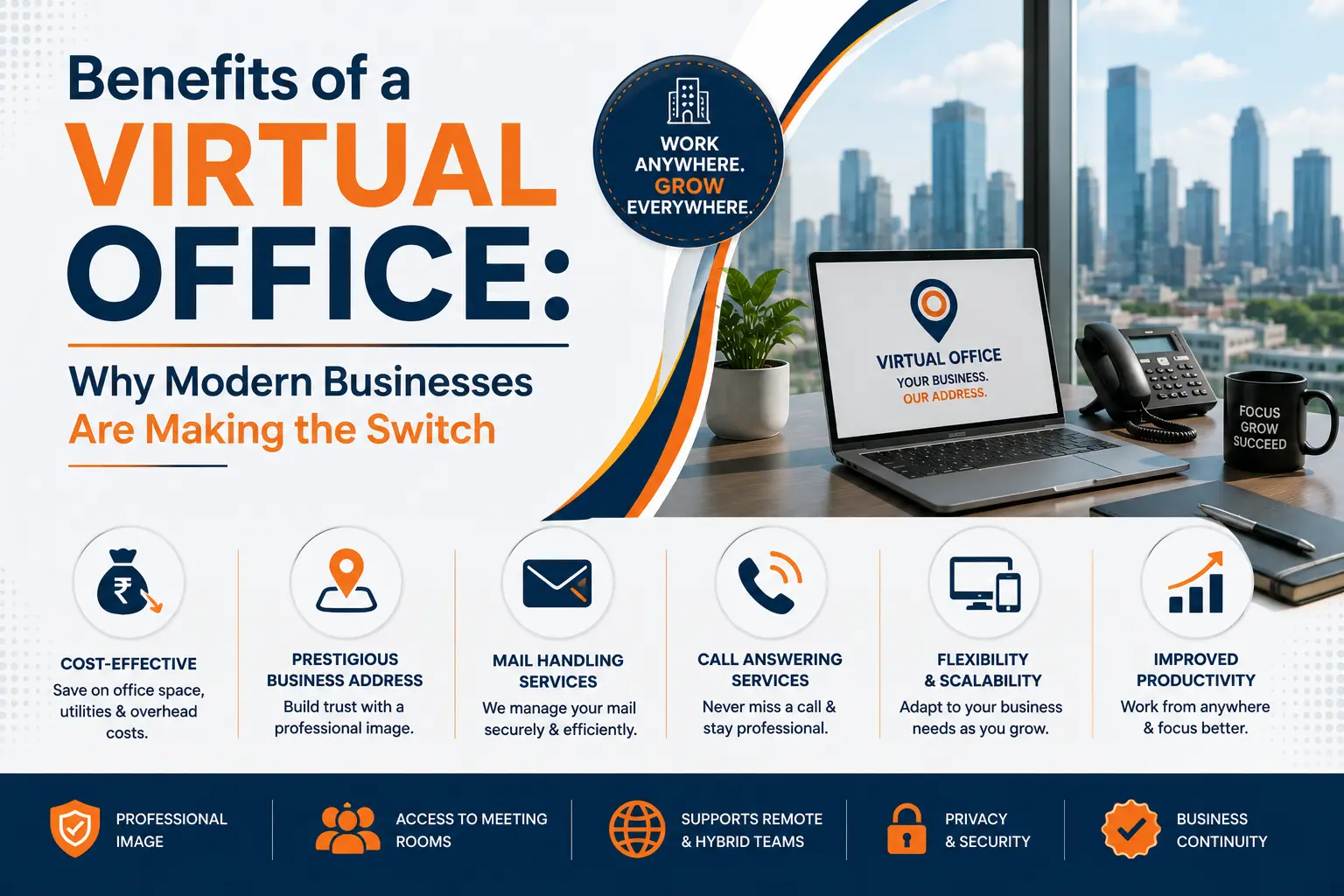
A virtual office gives you a real, registrable business address and the compliance paperwork that comes with it, without renting the physical space. You get the address, GST and company registration support, and mail handling, and you skip the rent, the deposit, and the fit-out. For a business that does not need a room full of desks, the difference in cost is large.
This is a straight comparison of what each option costs in India, where the money actually goes, and how big the gap really is.
What Is a Virtual Office?
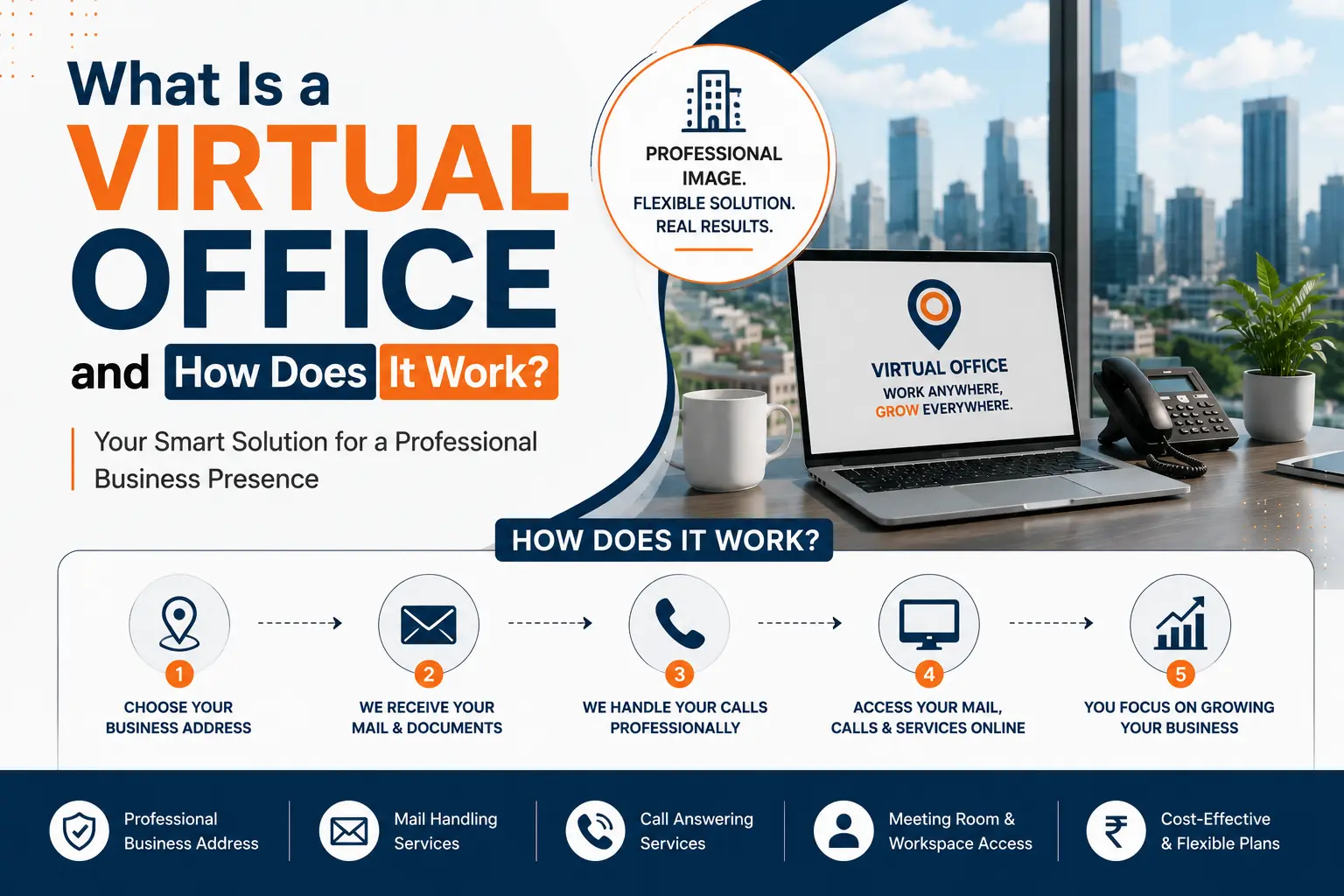
A virtual office is a commercial address you can use for official and business purposes without leasing the premises. A provider gives you the address plus a set of services, and you pay only for what you use.
A typical plan covers a professional business address, GST and company registration support, mail and courier handling, and access to meeting rooms when you need them. What it does not include is the daily physical workspace, which is exactly where most of the cost of a traditional office sits. If you want the full picture on pricing, this breakdown of what a virtual office actually costs in India goes deeper than we can here.
The real cost of a traditional office
Rent is only the visible part of the bill. The traditional office cost that catches founders off guard is everything that comes before and around the rent.
Office rents have been climbing for years. According to Knight Frank’s Q1 2026 data, average office rents crossed ₹100 per sq ft a month in Delhi-NCR and Bengaluru for the first time, with Delhi-NCR at ₹105, Bengaluru at ₹100.6, and Mumbai already at ₹125. Even a modest 1,000 sq ft space at those rates runs past ₹1,00,000 a month, or ₹12,00,000 a year, in a metro.
Then come the costs that do not show up in the monthly figure:
- Security deposit: Commercial leases in India commonly ask for six to twelve months of rent as a deposit, paid upfront. On a ₹1,00,000 rent, that is ₹6,00,000 to ₹12,00,000 locked away before you start.
- Fit-out and furniture: Interiors, cabling, air conditioning, and furniture can add ₹800 to ₹3,000 per sq ft, which is another few lakh on even a small space.
- Lock-in: Most commercial leases run three to nine years with a lock-in of one to five years. Leave early and you usually forfeit the deposit or pay rent for the remaining lock-in months.
- Utilities and upkeep: Electricity, internet, water, housekeeping, and maintenance are recurring monthly costs that sit entirely on you.
Add these together and the true first-year cost of a physical office is far higher than the rent line suggests.
Virtual office vs traditional office cost: a side-by-side view
Here is how the two compare across the costs that matter most to a small business.
| Cost factor | Traditional Office | Virtual Office |
|---|---|---|
| Monthly rent | ₹20,000 to ₹2,00,000, depending on city and area | From ₹799, billed annually |
| Security deposit | 6 to 12 months of rent, upfront | Usually none |
| Furniture and fit-out | ₹800 to ₹3,000 per sq ft | Not needed |
| Utilities and maintenance | Monthly, paid by you | Mostly Included |
| Lock-in | 1 to 5 years typical | Monthly or annual plans |
| Scaling to a new city | New lease each time | New address on a plan |
The pattern is clear across every row. A traditional office front-loads a large amount of capital and ties it up for years. A virtual office turns most of that into a small, predictable service fee.
How much can you save with a virtual office vs a traditional office?
For a business that does not need daily desk space, a virtual office can cut office-related costs by up to 90% compared with a traditional office.
The maths is straightforward. A small team taking a modest metro space pays from around ₹2,40,000 a year in rent at the lower end, and well over ₹20,00,000 in a prime location, before adding the deposit and fit-out. A virtual office address with GST support starts from ₹799 a month, which works out to under ₹10,000 for the year. Even against the cheapest physical space, that is the bulk of the cost gone.
The saving comes from four places.
No rent on physical space: You pay for the address and the services attached to it, not for square footage you are not using. In the office rent vs virtual office comparison, this single line accounts for most of the difference.
No upfront capital: There is no six-month deposit to lock away and no fit-out bill before you open. That freed-up cash can go into the actual business.
Lower running costs: Electricity, internet, maintenance, and pantry costs are either removed or bundled into the plan, which brings monthly spending right down.
Fewer support staff: A physical office often needs reception, housekeeping, and security. With a virtual office, the provider handles the address and mail, so you are not hiring for those roles.
Illustrative annual cost comparison
The numbers below are illustrative, based on a small team needing a metro business address rather than a full workspace. Actual figures vary by city and provider.
| Expense | Traditional office (per year) | Virtual office (per year) |
|---|---|---|
| Rent | ₹2,40,000 to ₹24,00,000 | From about ₹9,600 |
| Security deposit | ₹6,00,000 to ₹12,00,000, refundable but locked | None in most cases |
| Furniture and fit-out | ₹3,00,000 and up | None |
| Utilities and maintenance | ₹1,00,000 to ₹3,00,000 | Mostly included |
Even at the conservative end, a physical office ties up several lakh in the first year. A virtual office keeps the same year in five figures.
Easier expansion into multiple cities
The cost gap gets wider the moment you need a presence in more than one state. GST registration is state-specific, so a business selling across India often needs a registered address in each state it operates in. Renting an office in every state purely for compliance makes no financial sense.
A virtual office solves this cleanly. A company based in Bengaluru can hold a compliant virtual office address in Delhi and a virtual office in Mumbai at a fraction of the cost of leasing space in each. For e-commerce sellers, the same address works for registering on marketplaces like Amazon, Flipkart, and Meesho, so one plan covers both compliance and selling.
Who should use a virtual office?
A virtual office fits businesses that need a credible address and clean compliance more than they need a room to sit in. That usually means:
- Startups keeping early costs low
- Freelancers and consultants who want a professional address
- Remote and hybrid teams with no fixed office need
- E-commerce sellers registering across states
- Established businesses expanding into new cities
If your team genuinely needs to be together in one place every day, a physical office or a coworking desk may still be the right call. For everyone else, the cost case for a virtual office is hard to argue with. It is worth reading up on choosing between a virtual and physical office before you decide.
Frequently asked questions
How much can you save with a virtual office vs a traditional office?
A virtual office can reduce office-related costs by up to 90% for a business that does not need daily physical space. A metro office costs several lakh a year once rent, deposit, and fit-out are counted, while a virtual office address with GST support starts from ₹799 a month. The exact saving depends on your city and how much space you would otherwise have rented.
Is a virtual office cheaper than renting an office in India?
Yes, for most small and early-stage businesses. Renting an office means paying rent plus a deposit of six to twelve months, fit-out costs, and years of lock-in. A virtual office replaces all of that with a service fee starting from ₹799 a month, billed annually. The gap is largest for businesses that only need the address for compliance and client communication.
Are there hidden costs with a virtual office?
A virtual office has far fewer hidden costs than a lease, but read the plan before you sign. Check what the price includes, whether mail forwarding and on-site verification support are covered, and whether the address is verified for GST and ROC use. A clear plan should state its inclusions upfront, so you are not paying extra for basic compliance documents.
Can a virtual office be used for GST and company registration?
Yes, a virtual office can be used for both GST and company registration when the provider supplies the required documents. For registration, the client submits documents like PAN, Aadhaar, and video KYC, while the provider issues the NOC, rent agreement, and address proof such as an electricity bill. Using a verified, compliant address is what keeps the registration clean.
What to consider before you decide
Start with one question: does your business need a room to work in, or an address to register and operate from? If it is the address you need, a virtual office covers it at a small fraction of a lease, and frees up the capital a deposit and fit-out would otherwise swallow.
From there, compare plans on what they actually include, check that the address is verified for GST and ROC use, and pick a location that fits where you register and sell. Team Cowork offers verified virtual office addresses across 250+ locations in 28 states, with GST and company registration support and the compliance documents handled for you. Look at the options for the cities you operate in and choose the plan that matches how your business runs.